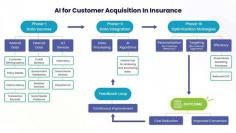
Customer acquisition has always been expensive in the U.S. insurance market—but in 2025 and beyond, it’s becoming a strategic battleground. With rising competition, increasingly price-sensitive consumers, and tighter margins, insurers are under pressure to rethink how they attract and retain policyholders. Generative AI (GenAI) is emerging as a powerful lever, helping insurers cut costs while improving precision, personalization, and speed. Login Login 0 repins 0 comments 0 likes
If you’ve worked in claims, underwriting, or fraud investigation for any length of time, you already know the pattern: every leap in technology creates new opportunities—not just for efficiency, but also for exploitation. The rise of generative AI has accelerated this cycle, and insurers across the U.S. are now facing a new class of risk—synthetic fraud powered by deepfakes. Login Login 0 repins 0 comments 0 likes
Quantum computing in insurance is paving the way for a new era in risk management. By harnessing the power of qubits, quantum computers can process vast, complex datasets far more efficiently than classical systems. This enables insurers to enhance catastrophe modeling, improve fraud detection, and refine pricing strategies. Quantum algorithms, such as Quantum Monte Carlo and Variational Quantum Eigensolver, offer more accurate simulations and optimized risk assessments. As quantum computing in insurance continues to evolve, it promises to revolutionize the industry, helping insurers navigate risk with greater precision and speed. Login Login 0 repins 0 comments 0 likes